 |
| Jackie Chan (left) and Warren Drummond (right) |
Bruce Lee said, "Absorb what is useful, discard what is not. Add what is essentially your own." Warren Drummond is a martial arts expert. He's also a storyboard artist. Put the two together and you get a Kung-Fu concept artist. Drummond has made storyboarding his own.
I first saw his storyboards from
Rise of the Planet of the Apes, but he's been working in the industry since 1994 on everything from
A Beautiful Mind to
X-Men: First Class.
He agreed to an exclusive interview to answer ten important questions. He names his favorite artists, the movie that didn't give him credit and the connection that helped him meet his wife.
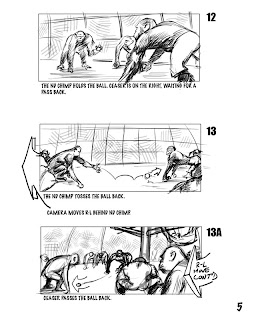 |
| Rise of the Planet of the Apes |
Q. When you began your journey as a designer you probably had a few role models, would you name two of your favorite artists?My favorite artists were my older brother, John Drummond Jr, as well the great John Romita Sr. I saw my brother's work all the time. His work was astounding. Professionals thought he should have gotten into comics, though John preferred fine art. Romita Sr's balance of anatomy and storytelling was only second to John Buscema (a LOT of "John's, eh?). Romita Sr was a better inker than Buscema, who was often inked by others. Buscema though drew the human body better than anyone.
Q. What has been your greatest artistic achievement in your life so far?(Image: Nash chase - A Beautiful Mind) Just getting FINALLY into the movie business almost 20 years ago and STAYING in it. I believe my work on A BEAUTIFUL MIND was a high point as I worked with Ron Howard and the movie won Best Picture. I was on it seven weeks. My friend, storyboard artist (and current 2nd Unit director as well) Brick Mason brought me on to help him. last fall, I got to do over a month on reshoots for THE AMAZING SPIDER-MAN. I hope it rocks.
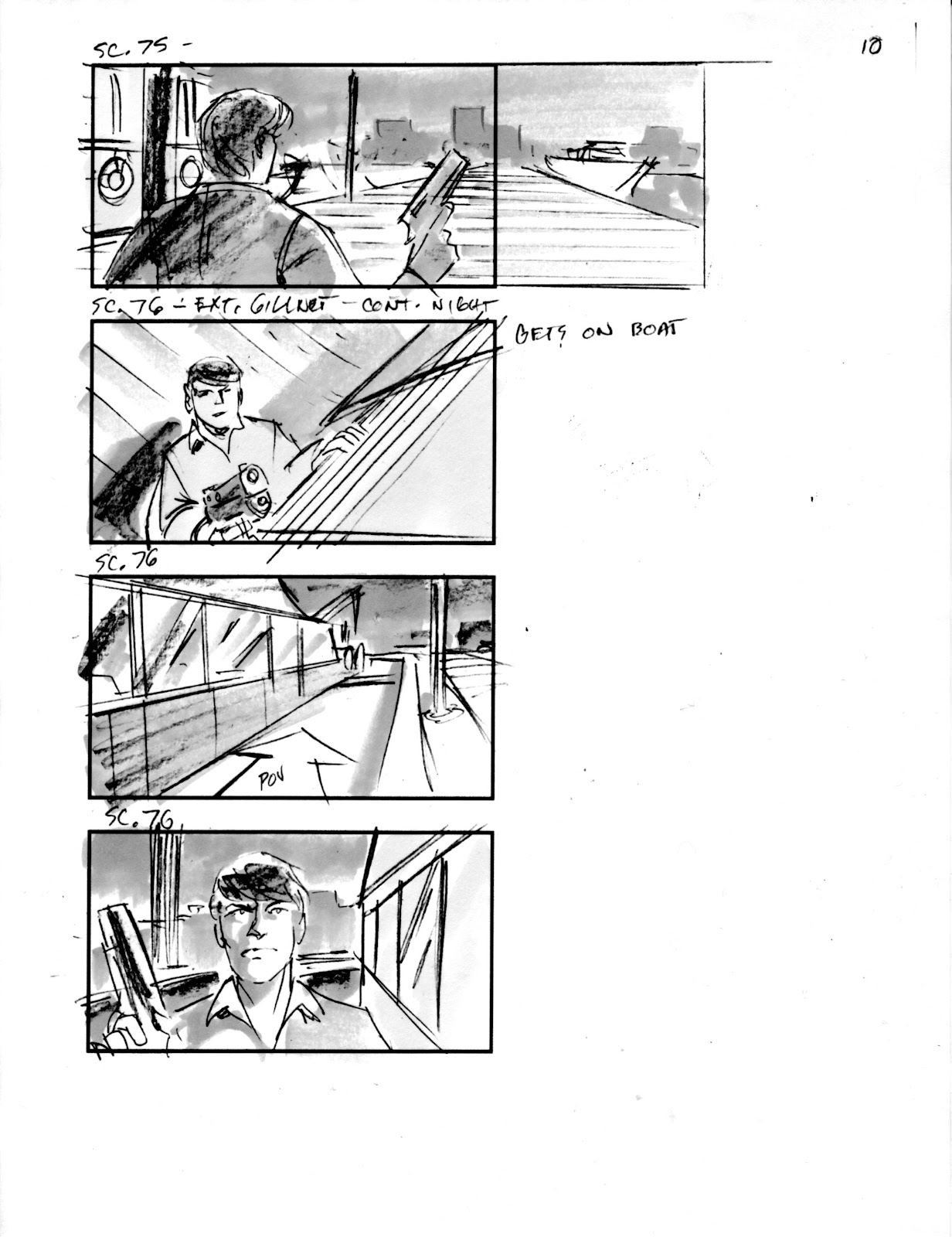
I got to work a week on STAR WARS: ATTACK OF THE CLONES, thanks to being buds with the stunt coordinator, Nick Gillard. I spent a blissful, geek-laden week at Skywalker Ranch.
Q. How has your martial arts training influenced your storyboard designs?(Image: Martial Arts study - personal) Martial arts has given me discipline and has kept me in shape to work those long hours. There are many martial artists I admire, Benny Urquidez, Anderson Silva, all of my previous instructors (who are all still in my life), and of course my hero, Bruce Lee.
Lee had an open mind to new things, as well as to keep trying to get better, and I have tried to hold on to that. There were also MANY unheralded black martial artists like Moses Powell, Steve Sanders, Carl Scott, etc whom I am sure I got something from if only through the ethers.
Q. What's it like seeing your storyboards come to life on screen?On a movie like SHAFT (2000) it was unreal as John Singleton often sticks close to his boards when they are needed. It also does not hurt the ego to see your name in the credits.
It does SUCK, however, when you work hard and they DON'T credit you. Hello, "ANALYZE THIS"!!!!
Q. What was your favorite memory during your time on Rise of the Planet of the Apes?Working with the director, Rupert Wyatt, a great guy, who's also so smart. I just loved the whole "process".
Q. What is your favorite movie and how many times have you seen it?JAWS. I can't count how many times I've seen it. Perfect film. SUPERMAN and STAR WARS made me want to get into the business. I STILL have yet to meet Spielberg!!!
ENTER THE DRAGON is in the top ten. Waahhh!!!
Q. What was your most surprising inspiration for a storyboard?(Image: Fast and the Furious 3: Tokyo Drift) 
Music certainly brings out different attributes, but many artists listen to some form of music while working. I listen to John Williams scores, The Beatles, or a Tribe Called Quest (Jamaica Queens in the house!!!).
Q. You said in an interview that your first love is writing. Is there a pet project you have in mind you can talk about?Nothing I can mention now, but my "coverage" on my current script went quite well. Let's talk in a year.
Q. In your line of work networking is key. What's the most amazing connection that networking has brought you?Well, I met my wife through director Carl Franklin and his wife, producer Jesse Beaton. Knowing Brick Mason landed me Ron Howard. John Singleton got me work with Denzel Washington when Denzel directed ANTWONE FISHER. Working with on that movie introduced me to the wonderful producer Todd Black. Years later, Todd optioned a script from my wife.
Q. What’s next for you? What other projects can we look forward to seeing?A just landed a few days helping out on a movie called THE TOMB (2013). I get to finally draw Arnold Schwarzenegger and Sylvester Stallone. No, I can't talk about it (LOL), but I really like the script.
See more of Warren Drummond's body of work at
WarrenDrummond.com and check out the list of other artists I've interviewed
here.
What do you think of the illustrations?



![[Image]](https://blogger.googleusercontent.com/img/b/R29vZ2xl/AVvXsEhF5af10rbpY8uszuSSTB5t8lOrhDr8HByA67ope0Dk1yrbz693CDjajI0fK2jH16fntS8zHd23yeL2PoaU6ipflIw9rGteKM1dPgCw7IaVCno35CZ8boq6q2sHcQbt64ezoKumbcHoD70/s856/Warren-Drummond-amazing-spiderman-top.jpg)
![[Image]](https://blogger.googleusercontent.com/img/b/R29vZ2xl/AVvXsEiaLJmuQOg6zAUCZj9xCaV9eTyaNU_14bs9O_G2RkYMEV4SJUPWhHm7v1bzfBubj2ia_ZW0p0Gh3PBl2nSw9BCdFrvhVBwymfyMbIOtw2W2CJB4xqr1lhhXVRzx5tOiCdVQErudt1wNkTs/s1600/Warren-Drummond-amazing-spiderman-001.jpg)
![[Image]](https://blogger.googleusercontent.com/img/b/R29vZ2xl/AVvXsEhh2-0YoUQmh5lMfjd5O7dO3gBv2j6t7mpcYz165XGHk1Yuo02rfih5ZvtMCgMDlNS7uCQ08WqhekaSxIasEhtF7vpsOqRVc8ZdKryofizy3Peo9VvyidLw1tRP8gkfwpFSNX8RVdxbFdA/s1600/Warren-Drummond-amazing-spiderman-002.jpg)
![[Image]](https://blogger.googleusercontent.com/img/b/R29vZ2xl/AVvXsEiYNIhaL0rfEIRFABV-b_DtNnNlc7QfX5jeo3fk9CD9D2fEb8QU6EJK4OIqb0MlHIuyNcxbn2BhzOhslyinngh3_JaLNKulwGr_5HUg-ObRS88jPE1cFt7SjOMmC-GO4x-NYhyphenhyphenElj1KbU4/s1600/Warren-Drummond-amazing-spiderman-003.jpg)
![[Image]](https://blogger.googleusercontent.com/img/b/R29vZ2xl/AVvXsEjqHdT5EZ3AoHmcuYm-WBFiACjKfLSfYUE5zO7x4ZAf4GeiLZotkAacn7e8F0UEZ8jTjLVsK67GbD7x96xcZ-115UQHYW0fyOfymB9vrjRQfQbbl-MiKaicrOq2gyffSdcCR99jt0NCBYc/s1600/Warren-Drummond-amazing-spiderman-004.jpg)
![[Image]](https://blogger.googleusercontent.com/img/b/R29vZ2xl/AVvXsEijh8F88-2QTRgcrUY7pX-xsVHZkA73eLgfYHXTWTpuqixwo_67Uy-oL8A6u0Ol1TciI-tDpzPTfYEzpkafQbn9ELKowRbEI0RoHZkmE8D-JLGmjtqxITnacNEs0MxNAhDR2z4EVKx6jGY/s1600/Warren-Drummond-amazing-spiderman-005.jpg)
![[Image]](https://blogger.googleusercontent.com/img/b/R29vZ2xl/AVvXsEgXApkRddIQKuQbljJ1wjzJSwNMI6otKuMuXVMwEMhrifAUMZFANng5R1xlCNNhSgECag4iFsTuQLx4AAfn63GP4FEQ8lqVUu70Qftoy9KNQRyZ6r7uiJhuR7iY-xrwJ0eTiC7CDRuViKw/s1600/Warren-Drummond-amazing-spiderman-006.jpg)
![[Image]](https://blogger.googleusercontent.com/img/b/R29vZ2xl/AVvXsEg7m5SFNfmsWg7pJYaTAEyDJrWgCXhRmxOvItqAaz5e54-P-ieoKRUu340iZTbWaCd0zWuKDO6qeCl4h6D4Yv5Dv7Qs7KEnzmpBYD5lR1-gdm0q0k4wRPozaPb8roL0-dIwxBL9qwDYr0Y/s1600/Warren-Drummond-amazing-spiderman-007.jpg)
![[Image]](https://blogger.googleusercontent.com/img/b/R29vZ2xl/AVvXsEhZxzFMxuEP2n9WxDYvaed558Cq4KH0-Dd4aGPOzFauauomX4nRWCnB-sCFvGTHGqoph82ILMF7zzQtmX5Tl3G20rtn5NEGkAUdqQG1cFqEPDYf3ma1O9Cbp68zbUZ6vdzV_wSnraf_578/s1600/Warren-Drummond-amazing-spiderman-008.jpg)
![[Image]](https://blogger.googleusercontent.com/img/b/R29vZ2xl/AVvXsEhz0KSEUZt8azzWPqrXvg9d5NKEJaX5w2adD07dF88cnJotPpA9CUuj3fK6vfRJq50NcLfT8Z9OOKrPXFrGGXx0IFtaVlICQp-_IINEbfrtt1bEJWr4p3mfrOj-Xol6jEFD8LlFI9SPkrA/s1600/Warren-Drummond-amazing-spiderman-009.jpg)
![[Image]](https://blogger.googleusercontent.com/img/b/R29vZ2xl/AVvXsEj4c5ZmR16f77KfEcT-5rOLNa0QviFyBSCrtW1SuB37bjEAmbmydOk4rGpwQwQv0aKqMzB36OFS78Cr5nD-lnKimCOOppRl6RAyfsTg86FlZ_JBVf7c19vhGNhUrL5h4y50qPWreFRNqwo/s1600/Warren-Drummond-amazing-spiderman-010.jpg)
![[Image]](https://blogger.googleusercontent.com/img/b/R29vZ2xl/AVvXsEjteV74vd2UgU2FOcNIj4F0NLLvuoQJu_wb-PmA-KhQtw-qyLodSuaY6iHB06zfczGvOYYtmRwZxBzYDsu6qzaBRhu6wL5ia69ks3sMRCaFfaT68NULYoTcmM1Utoldb5rjjSdmNaUGklo/s1600/Warren-Drummond-amazing-spiderman-011.jpg)
![[Image]](https://blogger.googleusercontent.com/img/b/R29vZ2xl/AVvXsEjHEhyphenhyphenT8a6qmPE20unKABGmWsB8fZJUQ3EoUUDV_fwA0xaLY7T6UI8wU9zkNVQYqhU6omHvoplryYGVX6cxZdj6wF3dr8zGQvx9Ium-SMajAmpc06lDI2EO0gSrJSnSO0PfGhHTLcbL_tI/s1600/Warren-Drummond-amazing-spiderman-012.jpg)


![[Image]](https://blogger.googleusercontent.com/img/b/R29vZ2xl/AVvXsEgD-LAGL2ek0b1OuQnIaSWze66q0lqO6tRyCle6WvnrzwZpJhg3AIQKhFIYSByhfmKBF-pzpnr97F5rVQ0I1ry4iu4xCeoqgfH6k-qj1IsLBi7xRlGbI9eKZOL11Obxkzrz8wSkbdKZ6vk/s1600/DAlessandro-Thor_rev_011_sample.jpg)
![[Image]](https://blogger.googleusercontent.com/img/b/R29vZ2xl/AVvXsEgxECXTknYfmN1_M8o0m5z8L7S9WtR489xsqcTZ6ZHnjrbcx_vDE3r7D8s1IAkbG949UlDdzWmuSp-E6l22UwqAhZRXZjaFTDC14UjpRwjjB19rdYJYvZ359Xgp1xHPZQTM6ZhZa2-aeNc/s1600/DAlessandro-0001-Thor_rev_001_sm.jpg)
![[Image]](https://blogger.googleusercontent.com/img/b/R29vZ2xl/AVvXsEg1gMDwLcItb6xMuJoq-6C0OQUnW5HHg2BMZIiCpGi4Vi956jU-s1RKZTsudeokNIx1ESliJtR5QLZ2S5XH6vEEsQWK4bUVs3cb5qle-StIT5AQD92ZMia3T9EFW8jKcm4jS6s355kCoMw/s1600/DAlessandro-0002-Thor_rev_002_sm.jpg)
![[Image]](https://blogger.googleusercontent.com/img/b/R29vZ2xl/AVvXsEgPfLhhHf9tznZ7tTWMIDLkxBm5P0uQcfIFlVl6j_7SoMoFYi95kryspKkqlF-e5IrfS52SJKkZVqDKkyauHPFbAoBNRyNVJuhubZeyuAAMnDltl26COcZvg09tK0Dfr1HZw1ZRH4RdCws/s1600/DAlessandro-0003-Thor_rev_003_sm.jpg)
![[Image]](https://blogger.googleusercontent.com/img/b/R29vZ2xl/AVvXsEgdyJ98N2sagfR9Z100lX89OwbLeSJzy6x7lMvvJdiFvyfLqDUz-8UwuEGGCXVRgiVOr5JvUVQEJPSfDKSTg6qN5W7io3cYdxD2v4bcIiNm4msKfGFuMaWZ0r-0e_MTU5OK0hGtDNOWmVY/s1600/DAlessandro-0004-Thor_rev_004_sm.jpg)
![[Image]](https://blogger.googleusercontent.com/img/b/R29vZ2xl/AVvXsEg8BnhebRn8IvOYyMLhYe6SDjiqKeN6SWKJoAO7UG0_3VmXlNscG17J_I9_tZ8JwyO0eIoy9YRdwQoA9VEPk0TBG0p7u4iFSCWcQlSAlCpDIWt2uMZmQqfLK2rE8gPSQGBBqYK9SFp4x3A/s1600/DAlessandro-0005-Thor_rev_005_sm.jpg)
![[Image]](https://blogger.googleusercontent.com/img/b/R29vZ2xl/AVvXsEj-Mg5qmKaxVpGD2h4Xb3BMiFVxzAjQzWGYwZCq1FTAhcRj0gzPCgyokzwzXnJ4iMxhpwpLjNCXTn06LQhre2bcnDLmhvwHmnbqIY6B71bkwL9eL5KauppgLfLTBRNom615fTkbjFtnFOc/s1600/DAlessandro-0006-Thor_rev_006_sm.jpg)
![[Image]](https://blogger.googleusercontent.com/img/b/R29vZ2xl/AVvXsEiZfBiL092Pu4Lriv4nRORzOCJvJc2fr8Sojp88vbp0Jd7e4mCOGXLvk41c39GeoBUhr91HiEXh3V20kzz8ckeTFgBMOM6Qly9xBUeVJ1WkXMYEeUKXcsaR-wviTYaLqbyciT63qSKby9Y/s1600/DAlessandro-0007-Thor_rev_007_sm.jpg)
![[Image]](https://blogger.googleusercontent.com/img/b/R29vZ2xl/AVvXsEjr3XnU7O4vhYJ1PwrN2PGpeqXPc_d-hs-cYCn2brBAn1xDrK1jfQ9VQrondoVdmcLhGhAYUUpVH9DLg3fAja9ih2QTl5rOcfk0PXhzQ-YkbQT74jybYonNCwKw5oBwAWMt2EOthhnPW60/s1600/DAlessandro-0008-Thor_rev_008_sm.jpg)
![[Image]](https://blogger.googleusercontent.com/img/b/R29vZ2xl/AVvXsEiflNWneCKVDVZPKkMI9LYP1cI0MeIj45Z6Y7PkplKl9jGgWbpAvAvzknD2hjxVHiHu3UI6Jn0MkLGl5afeMP48FecEfq1eHqSrRoJSqT6Te7vPrhHGsEGxhEtwxC3XmNPuLriI5g1-I5w/s1600/DAlessandro-0009-Thor_rev_009_sm.jpg)
![[Image]](https://blogger.googleusercontent.com/img/b/R29vZ2xl/AVvXsEhE_lsZqMihYVftmxmMpQsPjgDH1FUyx2NKs5ODykul51MFWPf6RWOGjdxeFyyHsf4D9jkaBMia7UiAG2xyvkfY6sRcJJeAiMgNuH_4g3FKCzsPJ24iiLOhSpKA5kSHC_Vntpc_dnDgOPw/s1600/DAlessandro-Thor_rev_010_sm.jpg)
![[Image]](https://blogger.googleusercontent.com/img/b/R29vZ2xl/AVvXsEhANXIlOUeDXJNTEAQY95Xv8IOFtEDPh85Ck9efwns84wBRvkXNhCpdi69kvbWfKwzZpCz5DNx1wku_L07PdzUSa92-78t4cXqR-_Ve4rjpAKztIvN777Q_CJ2TKPmIPxVnB3MhZ19nSAk/s1600/DAlessandro-Thor_rev_011_sm.jpg)
